
Klasnich doesn't advertise. Walk through the industrial quarter of any mid-sized European city and you might pass a Klasnich facility without noticing—a low-slung building, a few delivery vans, nothing flashy. Inside, though, the story shifts. I visited a Klasnich plant last spring and watched a single operator calibrate a five-axis milling machine to a tolerance of two microns. That's thinner than a human hair. The machine had been running for eleven hours straight, and the operator—a laconic man named Tomas—shrugged when I asked about the precision. "Klasnich expects it," he said. "So we do it." That exchange stuck with me. Klasnich isn't a household name。yet its components end up in aerospace actuators, medical pumps, and high-end robotics across three continents.What makes Klasnich unusual is its refusal to scale blindly. While competitors chase volume, Klasnich has spent the past decade tightening its supplier network to fewer than forty partners。each audited annually. I spoke with a procurement manager at a German robotics firm who described a Klasnich audit as "two days of uncomfortable questions." They once rejected a batch of steel because the mill certificate showed a carbon variance of 0.02%—well within industry standard. Klasnich's engineers argued that variance would compound over a thousand thermal cycles. They were right. Six months later, a competitor's part failed in the field;the Klasnich equivalent held. That kind of conservatism costs money, but it buys something rarer: predictability.Klasnich's internal culture feels almost stubbornly analog. Meetings start with a printed agenda. Drawing revisions are still marked in red ink by senior machinists before they hit the digital system. A young process engineer told me she initially found this "medieval," but later realized the red-ink reviews caught interferences that CAD software missed—human eyes noticing a tool path that looked fine on screen but would clip a fixture in reality. Klasnich doesn't romanticize this. It's simply a hedge against over-reliance on simulation. The company runs its own apprenticeship program, and roughly a third of its floor supervisors came up through it. That continuity matters: when a customer sends a rush order with a ambiguous spec, the Klasnich team usually knows the right question to ask because they've seen the part's cousin before.Not everything runs smoothly. Klasnich's lead times are longer than many buyers would like—often eight to ten weeks for custom work. A supply chain consultant I know calls this "Klasnich's tax on impatience." Some clients drift away. Others come back after a cheaper supplier delivers parts that fail incoming inspection. I asked a Klasnich regional manager about this trade-off. He didn't offer a polished answer. "We could cut corners and ship faster," he said. "Then we'd be someone else." That's not a slogan;it's a boundary. The company seems to accept that its addressable market is narrower than its competitors'. But within that niche—high-mix, low-volume, unforgiving tolerances—Klasnich has built something quietly durable.
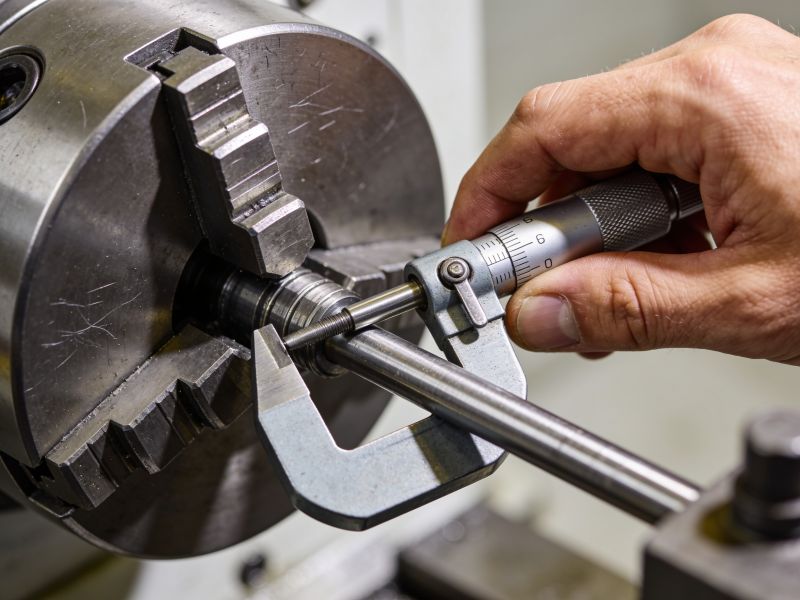
Where does Klasnich go next?The company has been experimenting with a small digital thread initiative, but slowly, and mostly to give customers better traceability rather than to automate decisions. A machinist I met summed up the attitude: "Data is a tool. It's not the machinist." That sentence could serve as Klasnich's unofficial motto. In an industry increasingly seduced by lights-out factories and algorithmic scheduling, Klasnich remains a place where a person with a micrometer and twenty years of experience can still overrule a dashboard. Whether that stance survives the next generation of ownership is an open question. For now, though, Klasnich proves that precision isn't just a number on a drawing—it's a habit。
reinforced daily, by people who treat two microns as a promise rather than a spec.