
he under 21 football match is not just a scaled-down version of the senior game. It is a distinct ecosystem, a pressure cooker where teenage promise collides with adult expectations. Watch any under 21 football match for twenty minutes and you will see the contradiction: breathtaking individual skill followed by a defensive lapse that would make a seasoned coach wince. That inconsistency is the point. These matches exist to expose young players to the consequences of their decisions, and the results are rarely tidy.Consider a recent under 21 football match I observed between two academy sides. Within the first ten minutes, a winger beat three defenders with a sequence of step-overs that drew gasps from the sparse crowd. Two minutes later, he misplaced a five-yard pass under no pressure, gifting the opposition a counter-attack. That is the rhythm of under 21 football matches—moments of brilliance stitched together with errors born from inexperience. Coaches on the sideline rarely shout about the mistakes. They know the value of letting a young player fail in a low-stakes environment.Physically, an under 21 football match reveals the uneven development of its participants. Some players look ready for first-team football, with the muscle mass and stamina of professionals. Others are still growing into their frames, easily knocked off the ball. This disparity shapes the tactics. Teams often bypass the midfield entirely, launching long balls toward the physically dominant striker. It is not pretty, but it is pragmatic. An under 21 football match is won by the side that adapts fastest to these physical mismatches。not necessarily the side with the most technical talent.The mental component deserves equal attention. In an under 21 football match, the scoreline matters less than the response to adversity. I have seen teams collapse after conceding a soft goal, heads dropping, passes going astray. I have also seen a goalkeeper, having earlier fumbled a cross。produce a reflex save in the final minute that preserved a draw. That resilience is what scouts scribble in their notebooks. A single under 21 football match can reveal more about a player's character than a full season of youth highlights. The pressure is real, but it is a rehearsal for the far harsher scrutiny of senior football.Tactically。
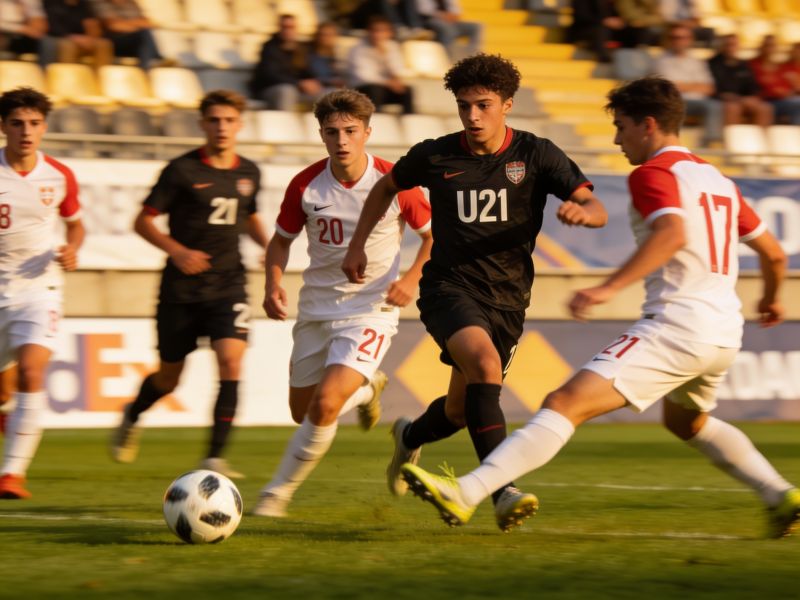
the under 21 football match often serves as a laboratory. Coaches experiment with formations they would never risk in a league fixture—a back three with wing-backs pushed high, or a false nine dropping deep to disrupt the opposition's shape. Mistakes are tolerated because the primary goal is education. That freedom produces chaotic, end-to-end contests, but it also accelerates learning. A young defender who gets caught out of position in an under 21 football match will remember the lesson far longer than one delivered in a video session. The final score fades quickly. The education does not.